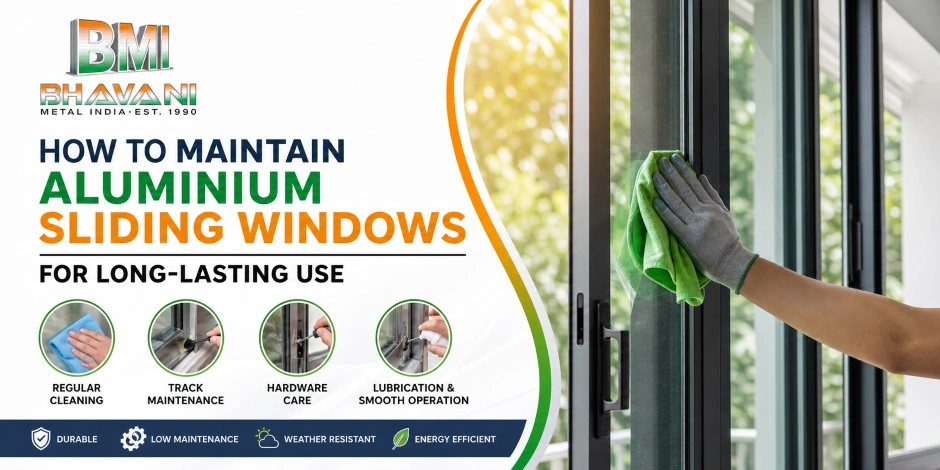
How to Maintain Aluminium Sliding Windows for Long-Lasting Use
An Aluminium Sliding Window in India goes through more stress than most homeowners realise - dust storms in the north, salt air on the coasts, and humidity everywhere in between. The good news is that aluminium frames are built to take this punishment, but only if they get a bit of regular attention. This guide walks through exactly what that attention looks like, section by section, so your windows keep sliding as smoothly on year five as they did on day one.
Regular maintenance of an Aluminium Sliding Window mainly involves cleaning the tracks every month, lubricating the rollers every three to six months, checking rubber seals twice a year, and rinsing salt or dust buildup after extreme weather. Done consistently, this routine can add five to ten years to a window's functional life without any major repair costs.
Why Aluminium Sliding Windows Need Regular Maintenance
Aluminium itself doesn't rust, which is the main reason it's the default choice for windows across Indian homes and apartments. That resistance to corrosion, though, doesn't mean the whole window system is maintenance-free.
The moving parts - rollers, tracks, and rubber gaskets - are where almost every problem starts. Dust settles in the track channel, mixes with humidity, and turns into a gritty paste that grinds against the rollers every time the window slides. Over eighteen to twenty-four months of neglect, this buildup is usually the single biggest reason sliding windows start sticking or jamming.
Coastal cities add a second layer of wear. Salt-laden air reacts with exposed metal fittings, screws, and even anodised coatings over time, which is why an Aluminium Sliding Window Mumbai installation typically needs more frequent attention than the same window in a drier inland city like Pune or Nagpur.
Skipping maintenance doesn't just cost convenience - it costs money. A jammed roller that gets ignored for a year or two often ends up damaging the track channel itself, turning a ten-minute lubrication job into a full track replacement. Most repair technicians in metro cities will confirm that at least half the service calls they get for sliding windows trace back to dirt and dryness that a simple cleaning routine would have prevented.
How Do You Clean Aluminium Sliding Window Tracks and Frames?
Cleaning is the single most effective maintenance step, and it takes less time than most people expect.
Cleaning the Frame
A soft microfiber cloth with a mild soap-and-water solution removes surface dust and grime without scratching the anodised or powder-coated finish. Harsh chemical cleaners, especially anything acidic or ammonia-based, strip the protective coating and expose the raw aluminium underneath to faster oxidation.
Wipe the frame dry immediately after cleaning rather than letting it air dry. Standing water in the corner joints is one of the quieter causes of long-term corrosion in coastal homes.
Cleaning the Tracks and Rollers
The track channel collects the most debris because it sits at the bottom of the window and catches everything that falls. A small vacuum nozzle or a stiff brush clears out loose dirt first, followed by a damp cloth to lift the remaining film.
Once the track is dry, a silicone-based lubricant (never regular oil or grease, which attracts more dust) keeps the rollers moving freely. This single step, repeated every three to six months, prevents the vast majority of sticking complaints homeowners report.
Homes near construction zones or highways need this cleaning cycle shortened to roughly every two to three weeks. Fine cement dust and vehicle exhaust particles settle into the track faster than ordinary household dust, and waiting a full month between cleanings in these conditions usually means the grinding paste has already formed by the time you get to it.
What Causes Aluminium Sliding Windows to Stop Sliding Smoothly?
Three issues account for almost every sliding problem reported by Indian homeowners: debris buildup in the track, worn or misaligned rollers, and frame warping from poor installation.
Debris is the easiest to fix and the most common cause, covered in the cleaning routine above. Worn rollers are a mechanical issue - after roughly eight to ten years of daily use, the nylon or steel roller wheels flatten slightly and lose their smooth roll, and replacement is usually cheaper than people assume, often under a few hundred rupees per roller.
Frame warping is rarer with quality aluminium profiles but shows up when the original installation wasn't level. A window that was even slightly out of alignment on day one will get progressively harder to slide as the frame settles further, and no amount of lubrication fixes a structural alignment problem.
A simple way to tell these apart is to lift the sliding panel slightly while pushing it sideways. If it suddenly moves freely, the rollers or track were the issue. If the resistance stays constant no matter how the panel is angled, the frame itself is likely out of square, and that calls for a technician rather than a DIY fix.
Protecting Aluminium Sliding Windows from Coastal and Monsoon Damage
Monsoon season is when most maintenance complaints spike, and it's worth preparing for rather than reacting to.
Before the rains arrive, check that the weep holes - the small drainage slots at the base of the frame - are clear of dust and debris. Blocked weep holes trap rainwater inside the track, which speeds up corrosion of fittings and can eventually seep into the wall cavity.
For any Aluminium Sliding Window Mumbai or Chennai homeowners deal with, a quick rinse with fresh water after heavy salt spray or sea breeze exposure prevents the slow buildup of chloride deposits on hinges and screws. This is a five-minute task that meaningfully extends hardware life in coastal conditions.
Rubber seals and gaskets also deserve a check twice a year. These compress and lose elasticity with heat exposure, and a seal that's lost its shape lets both water and dust into the frame, undermining everything else in the maintenance routine.
North Indian summers bring a different challenge: dust storms rather than salt spray. In cities like Delhi, Jaipur, and Ahmedabad, fine dust works its way into the track within days of a storm, so it's worth doing a quick wipe-down right after any major dust event rather than waiting for the next scheduled cleaning.
Building a Simple Maintenance Schedule
A predictable schedule beats reactive fixing every time. Here's a routine that covers most climate conditions across India:
- Monthly: Wipe down tracks and frames, clear visible dust from the channel.
- Every 3–6 months: Apply silicone lubricant to rollers and hinges.
- Twice a year (pre- and post-monsoon): Inspect weep holes, rubber seals, and drainage points.
- Annually: Check roller condition and screw tightness, tighten or replace as needed.
- After extreme weather: Rinse coastal installations to remove salt residue.
This kind of structured upkeep is far cheaper than replacing an entire Aluminium Sliding Window frame, which typically becomes necessary only when maintenance has been skipped for several years running.
Frequently Asked Questions
How often should aluminium sliding windows be cleaned?
Tracks and frames should be wiped down monthly, with a deeper clean including lubrication every three to six months. Coastal homes benefit from more frequent attention due to salt exposure.
Can I use any oil to lubricate the rollers?
No - regular oil or grease attracts dust and makes the buildup worse over time. A silicone-based spray lubricant is the right choice because it stays cleaner and lasts longer between applications.
Why is my aluminium sliding window hard to open?
The most common cause is debris trapped in the track channel, followed by worn rollers after years of use. In rare cases, it comes down to the frame not being installed level in the first place.
Do aluminium sliding windows rust?
Aluminium itself doesn't rust the way steel does, but fittings, screws, and hinges made of other metals can corrode, especially in coastal air. Regular cleaning and lubrication prevent most of this.
How long do aluminium sliding windows last with proper maintenance?
How long do aluminium sliding windows last with proper maintenance? With consistent upkeep, aluminium sliding windows commonly last twenty to twenty-five years or more, since the frame material itself doesn't degrade - it's the moving parts that need periodic attention to keep pace.
Maintaining an Aluminium Sliding Window in India isn't complicated, but it does need to be consistent. A monthly wipe-down and a seasonal check take less time than dealing with a stuck window mid-summer or a corroded hinge after monsoon. Build the habit once, and the window does the rest for the next two decades.